Alexandrite Laser for Dark Spots
We treat stubborn brown spots one at a time,
and examine each before the laser touches it.

What Is the
Alexandrite Laser?
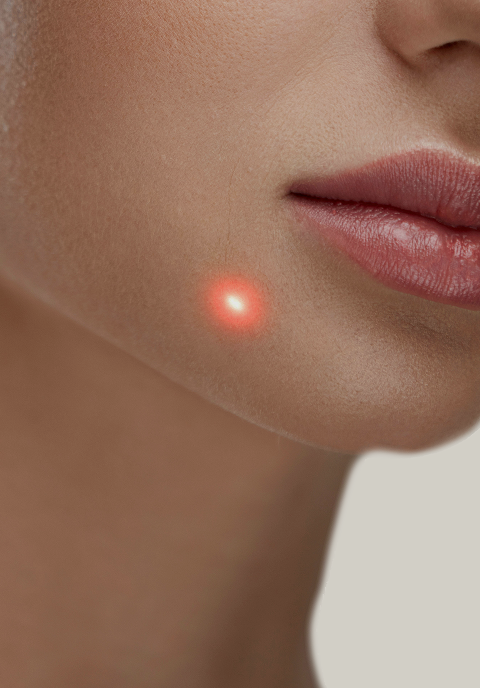
The Alex TriVantage is a Q-switched alexandrite laser. Its very short pulses of a single wavelength are absorbed by brown pigment, breaking a dark spot’s pigment into fragments your skin then clears. That precision treats individual, well defined spots, such as sun spots and age spots on the face, hands and chest, without resurfacing the skin around them.
At a Glance
- Comfort
- Quick pulses; your eyes are protected
- Downtime
- Depends on the area and the number of spots
- Results in
- As treated spots fade, over the following weeks
- Sessions
- Depends on each spot; some need a second
- Lasts
- As long as you protect your skin; pigment can return
Who It’s For
Brown spots with clear borders, treated individually.
Ideal For
Individual sun spots and age spots with clear borders, on the face, the backs of the hands and the chest, when a few stubborn spots need treating rather than the whole face. Every spot is examined first: a spot your doctor is not sure about never goes under the laser until it has been checked. See all our lasers and devices.
When to Wait
Melasma, the ill defined, symmetric patches on the cheeks, forehead or upper lip, is not treated with a laser as a first step. It starts with a daily routine and prescriptions. If you are prone to dark marks after inflammation, the laser itself can darken them, so the routine comes first. A tan should fade before treatment.
Alexandrite, IPL or Fraxel?
The right pigment treatment depends on the depth and the spread of the pigment. The Alexandrite laser aims at individual spots; IPL treats scattered sun spots and redness across the face together; Fraxel, a fractional laser, resurfaces sun damage and texture over a whole area. Your doctor chooses with you, and sometimes combines them. Compare the Alexandrite laser, IPL and Fraxel for dark spots.
The Treatment
1
Examine
Every Spot
Your doctor examines each spot to confirm it is a benign sun spot and not melasma or something that needs checking. Most patients start with a targeted routine for 8 to 10 weeks.
2
Target the
Pigment
With your eyes protected, the laser sends very short pulses into each spot. The pigment absorbs them and breaks into fragments, and your skin’s own response clears them.
3
Spots Fade
Over Weeks
Treated spots fade over the following weeks. Daily sunscreen and your routine help keep deeper pigment from surfacing again.
Beneath the Surface
Often paired with: IPL, Customized Care and Vbeam.
“As a Mohs surgeon, I look closely at every spot before it is treated. A sun spot can go under the laser. Anything I am unsure of gets checked first.”
In Our Patients’ Words

“
I highly recommend Dr. Fisher. I followed her from her previous practice and I continue to be happy with my results. I’ve gotten fillers and laser. Whenever I’ve wanted to do more, she was always honest with me. If I didn’t need it, I could count on her to tell me
Lillian J.
“
The absolute best dermatology appointment experience I’ve EVER had. Dr. Idriss was incredibly thorough and so kind. I’ve been such a fan of her for so long and she’s even more incredible in person. …
Kate R.
“
Dr. Fisher is amazing! She answered all of my questions and never pushed me onto anything. She cares about her patients. Will definitely come to her again if I need an opinion on anything relating to hair or skin.
Zubaida M.
Bryant Park, New York
Your Dermatologists

Founder
Dr. Shereene Idriss
Asks for 8 to 10 weeks of a targeted routine before any laser.
Board-certified, Practicing since 2013

Dermatologic Surgeon
Dr. Juliya Fisher
Brings a skin cancer surgeon’s eye to every spot before it is treated.
Double Board-certified, Columbia Mohs fellowship
Both doctors share one philosophy, so either is a good place to start. Book online with Dr. Fisher, or call (212) 612-1520 for Dr. Idriss.
Questions, Answered
What is the Alex TriVantage laser?
Does laser remove dark spots permanently?
Can the Alexandrite laser treat melasma?
Is it a sun spot or melasma?
Should I try skincare before a laser for dark spots?
Is the Alexandrite laser safe for darker skin?
Can I have laser for dark spots in the summer?
How much does laser dark spot removal cost?
We do not perform cosmetic treatments during pregnancy. Breastfeeding patients are evaluated case by case.