Melasma Treatment
Medical first: prescriptions and microneedling, never IPL.
With Dr. Juliya Fisher and Dr. Shereene Idriss.

In Brief
Melasma is a chronic pigment condition that leaves ill defined, often symmetric brown patches on the cheeks, forehead and upper lip. Hormones, sunlight and heat set it off. We treat it medically first, with daily sun protection, short prescription courses and SkinPen microneedling, which uses no heat. A laser comes later, if at all, and IPL never. It can be controlled, not cured.
Diagnosis First
Melasma comes from pigment cells that overreact, in the surface of the skin and sometimes deeper, which is why it fades and returns. Three things set it off:
- Hormones. Pregnancy, IVF, birth control pills that contain estrogen and menopause can all set it off or make it worse.
- Light. Sun, including the UVA that comes through windows, and visible light from the sun, which a tinted sunscreen with iron oxide helps block.
- Heat and inflammation. Hot yoga, saunas, steam, a phone held to your cheek, irritating skincare and heat based treatments can all wake it up.
Not every brown spot is melasma. A sun spot has defined borders; melasma spreads in a soft, often symmetric patch across both cheeks, the forehead or the upper lip. Dr. Idriss has melasma herself, which flared after IVF and her pregnancies, and keeps it quiet with a daily routine.
Melasma and a sun spot can look alike, and the IPL that clears one can make the other rebound. Telling them apart is a dermatologist’s work.
“With melasma, patience pays. If it takes a whole season to get your routine right, that is time well spent. Chasing a quick result is how the pigment comes back darker.”
What We’d Skip
Much of what’s sold for melasma makes it worse. We’ll often recommend less.
Don’t get IPL for melasma
IPL is a bright, hot light, and heat drives melasma. “The one treatment I would never recommend you get is IPL,” says Dr. Idriss. It can look better for a few months, then rebound worse and become harder to treat. We use IPL for sun spots and redness, never for melasma.
Don’t expect a laser to fix it
Heat based lasers such as Fraxel or CO2 can flare melasma, and no laser stops the pigment cells from reacting again. If a laser is ever considered, it comes after a routine has melasma under control, at conservative settings.
Don’t choose radiofrequency microneedling for it
Morpheus8 and SecretRF add heat to the needles, which can make melasma flare. We use plain microneedling instead.
Don’t stay on hydroquinone indefinitely
Hydroquinone is the gold standard prescription, but it isn’t meant for long term use. It is prescribed in courses, cycled on and off, with a daily routine that holds the result when you stop.
Don’t sit in the heat
Hot yoga, saunas, steam rooms, infrared and red light devices can all stimulate the pigment cells. Keep the skin cool and calm.
How Is Melasma Treated?
Melasma answers to a plan more than to any single procedure. Daily protection comes first, prescriptions when it flares, and treatment without heat once it is stable:
- Every day: sun protection and a routine that quiets pigment. A tinted sunscreen with iron oxide, every day, and a routine of several ingredients that work on pigment at different steps, such as tranexamic, glycolic, lactic, kojic and azelaic acids, arbutin, licorice root, niacinamide and a gentle vitamin C. Your doctor builds it around your skin.
- When it flares: a short prescription course. Hydroquinone in cycles, often with prescription azelaic acid or tretinoin. If hydroquinone doesn’t work or you can’t tolerate it, oral tranexamic acid is an option for the right candidate, after your doctor reviews your health history.
- In the office, once your routine is in place: microneedling with tranexamic acid. SkinPen Microneedling uses fine needles with no heat, and tranexamic acid is applied right after or, for stubborn patches, injected into the skin. “That combination is gold,” says Dr. Idriss. Sessions are timed around the season, because heat and sun matter.
- Only once melasma is under control, and not for everyone: a laser, with great care. A heat based laser such as Fraxel Dual Laser may be considered at conservative settings, never as the first step. Only once melasma is under control, Dr. Idriss says, can you “potentially, maybe, flirt with the idea of a laser.”
Melasma is managed, not cured: the routine that fades it is the same routine that keeps it faded.
The Treatments
Most melasma care happens at home. In the office, we use two treatments for it.
- Dr. Idriss’s favorite for melasma
 SkinPen MicroneedlingMicroneedling with no heat, paired with tranexamic acid
 Fraxel Dual LaserOnly once melasma is controlled, at conservative settings; often not at all
Side by Side
Heat is what separates them. Microneedling without heat is our in office treatment for melasma; heat based lasers come later, if at all, and IPL never.
| Treatment | Heat | For melasma at Idriss Dermatology | Downtime |
|---|---|---|---|
| SkinPen MicroneedlingMicroneedling, often with PRP | None: fine needles only, no radiofrequency | Yes, once a routine is in place, with tranexamic acid, timed around the season | 1 to 3 days of redness |
| Fraxel Dual LaserNon-ablative fractional laser, 1550 nm and 1927 nm | Yes: a fractional laser that heats columns of skin | Only once melasma is under control, at conservative settings; often not at all | Shorter than ablative lasers; a few days of redness and peeling |
| Clear + BrilliantThe gentler laser in the Fraxel family | Yes: a gentler fractional laser | Usually not: its maker lists melasma among conditions that may make someone a poor candidate | Little to none; redness usually settles in 12 to 24 hours |
| IPLIntense pulsed light | Yes: a broad, intense light, not a laser | Never: melasma can rebound worse and become harder to treat | Little from the light itself; skip the sun after |
In Their Words

“
Dr. Fisher is great, I’ve seen her many times for a variety of different conditions. I never feel rushed and her advice on treatments, products, and care have always been highly effective. …
August R.
“
I would recommend Dr Idriss a thousand times over and over. She is extremely knowledgeable, knows what will work and what won’t and will always give you an honest recommendations. You will never feel pushed into moving forward with any injections or procedures.
Hiva F.
“
Highly recommend Dr. Fisher! She truly cares about your skin health before anything else, which made the experience incredibly comforting and informative. I left feeling not only great about my results but like I’d actually learned something about my skin. …
Tyler G.
“
Dr. Idriss takes her time to listen to your concerns. She works with you to develop a treatment plan you are comfortable with, without ever being pushy. Her work is subtle and her expertise is evident. …
Sydney S.
Bryant Park, New York
Your Dermatologists
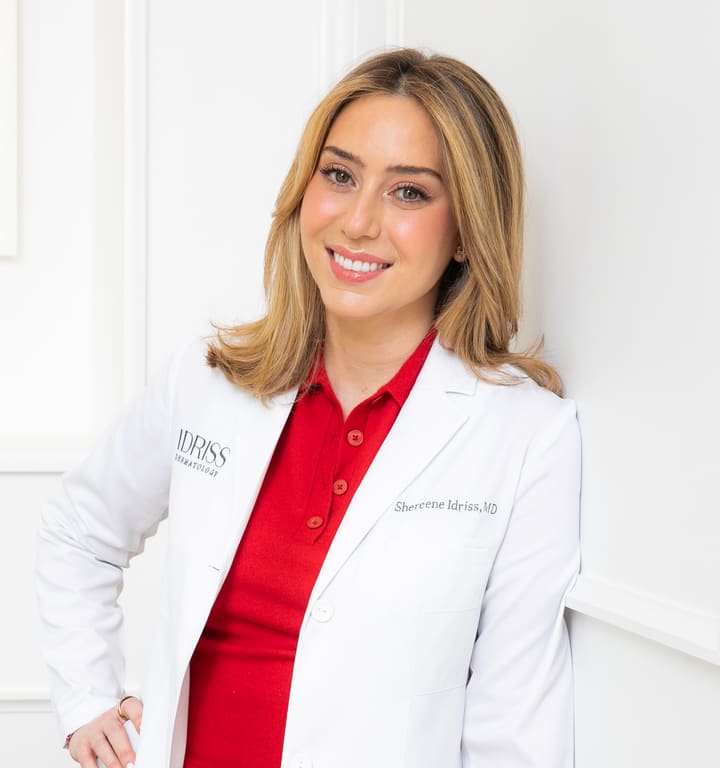
Founder
Dr. Shereene Idriss
Candid advice, subtle results.
Board-certified, Practicing since 2013
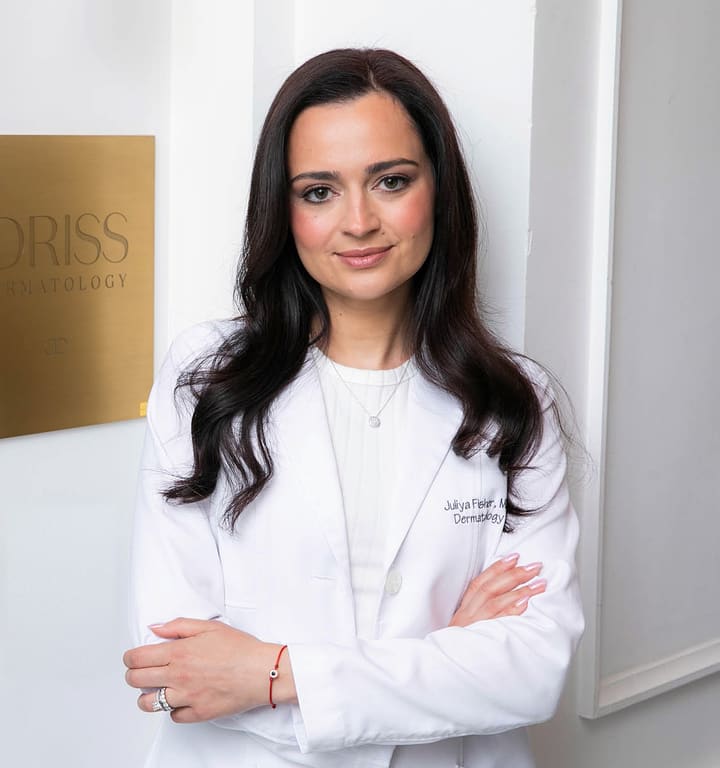
Dermatologic Surgeon
Dr. Juliya Fisher
Trained to work in millimeters.
Double Board-certified, Columbia Mohs fellowship
Both doctors share one philosophy, so either is a good place to start. Book online with Dr. Fisher, or call (212) 612-1520 for Dr. Idriss.