Dark Spots & Sun Damage
For sun spots, age spots and an uneven tone.
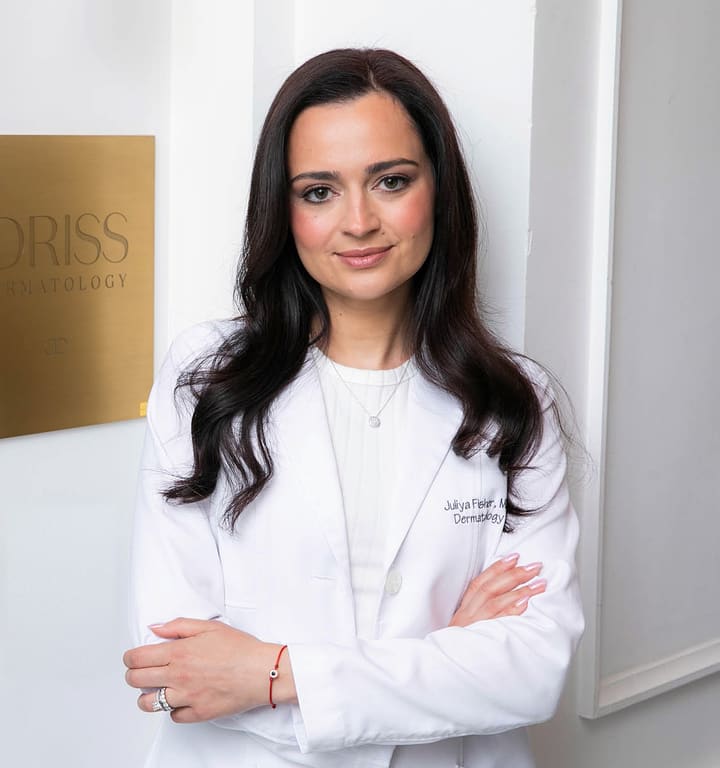
With Dr. Juliya Fisher and Dr. Shereene Idriss.

In Brief
Dark spots from sun damage, such as sun spots, age spots and freckling, build up in the skin after years of sun. A daily routine fades them first, and a laser follows when that isn’t enough. The Alexandrite laser picks off a few defined spots, Fraxel treats sun damage across a whole area, and IPL takes on brown and red together. Melasma is treated differently.
Diagnosis First
Most dark spots are sun damage reaching the surface. Each time UV light hits your skin, pigment cells make melanin to shield it, and after years of sun the pigment stays. “By the time this spot appears on the surface of the skin, it has been lingering for years underneath the surface of the skin,” says Dr. Idriss. Before treating a spot, your doctor wants to know three things about it.
- Type. A sun spot has defined borders and doesn’t fade in winter; a freckle comes and goes with the sun; melasma is an ill defined, often symmetric patch; and a dark mark after acne or irritation is post inflammatory hyperpigmentation. Each is treated differently.
- Depth. Pigment on the surface is what you see; pigment deeper in the skin is what comes back. A UV light called a Wood’s lamp shows pigment the eye misses and helps your doctor judge how deep it sits.
- Spread. A few defined spots call for a spot treatment, aimed at each one. Brown spots scattered across the face call for a field treatment, which treats the whole surface.
Sun spots and freckles are also a sign of UV damage, so a spot that is new or changing is examined first and checked if needed, never simply lasered.
A sun spot, a freckle, melasma and a mark left by acne can sit side by side on one cheek. Sorting them is where a dermatologist starts.
What We’d Skip
Chasing dark spots the wrong way can bring the pigment back darker.
Don’t make a laser your first move
Start with a daily routine that targets pigment, with or without a prescription, for 8 to 10 weeks. “I love lasers. I have a ton of lasers in my office,” says Dr. Idriss, but not as the first move against sun damage. In her experience, about half her patients are happy at that point without one.
Don’t laser a spot no one has examined
A dark spot can be a sun spot, melasma or something that needs checking. Your doctor examines every spot before treating it, and a spot that is new or changing is checked, not lasered.
Don’t treat melasma like a sun spot
Heat can make melasma worse, so it isn’t treated with a laser first, and IPL can make it rebound worse. It starts with skincare and prescriptions (see how we treat melasma).
Don’t stop protecting your skin after treatment
Deeper pigment that a laser never reached can rise to the surface and wake up. Daily sunscreen and a routine that targets pigment are what keep a result.
Don’t buy a set of sessions before your first
Your doctor sets the plan once your skin has shown how it responds to the first session.
“A laser can fade the spots you see today. Daily sunscreen is what holds new ones back, so I never treat one without the other.”
How Are Dark Spots and Sun Damage Treated?
Type, depth and spread decide the treatment, and a daily routine comes first.
- Sun damage spread across the face, neck or chest. Fraxel Dual Laser is a field treatment. Its 1927 nm setting treats discoloration across a whole area, and its 1550 nm setting smooths the rough texture that often comes with it.
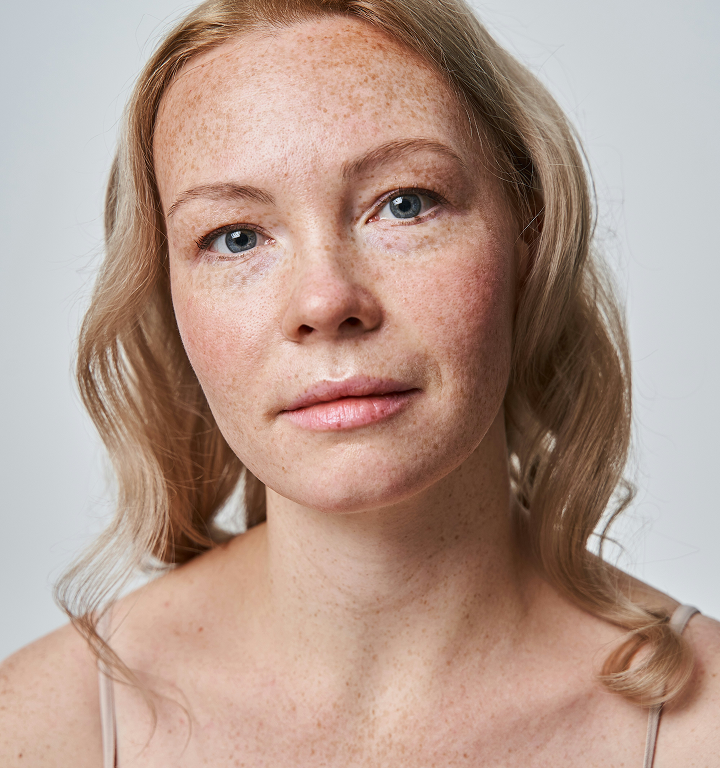
- A few defined sun spots or age spots. The Alexandrite laser aims very short pulses at each spot, so stubborn individual spots on the face, hands or chest can be treated without resurfacing the skin around them.
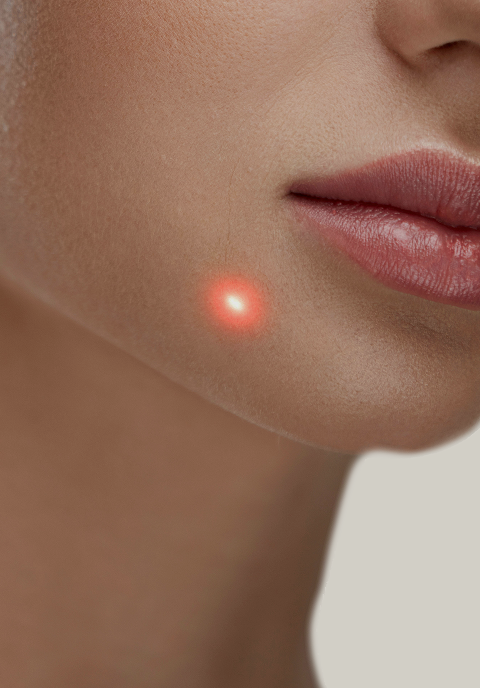
- Brown spots with background redness. IPL sends many wavelengths at once, so it treats brown and red together. It usually needs more sessions than a laser, and it is never used for melasma.
- Early sun damage and a dull, uneven tone. Clear + Brilliant, the gentler laser in the Fraxel family, refreshes tone with little downtime over a series.
- Redness and broken capillaries that come with sun damage. Vbeam, a pulsed dye laser, targets the red of small blood vessels rather than brown pigment.
Most plans are a routine first, then one of these, sometimes two. “Lasers are a finishing tool. They’re not a starting off tool,” as Dr. Idriss says.
The Treatments
Four lasers and light treatments fade dark spots. Vbeam, for the redness that often comes with sun damage, is in the side by side below.
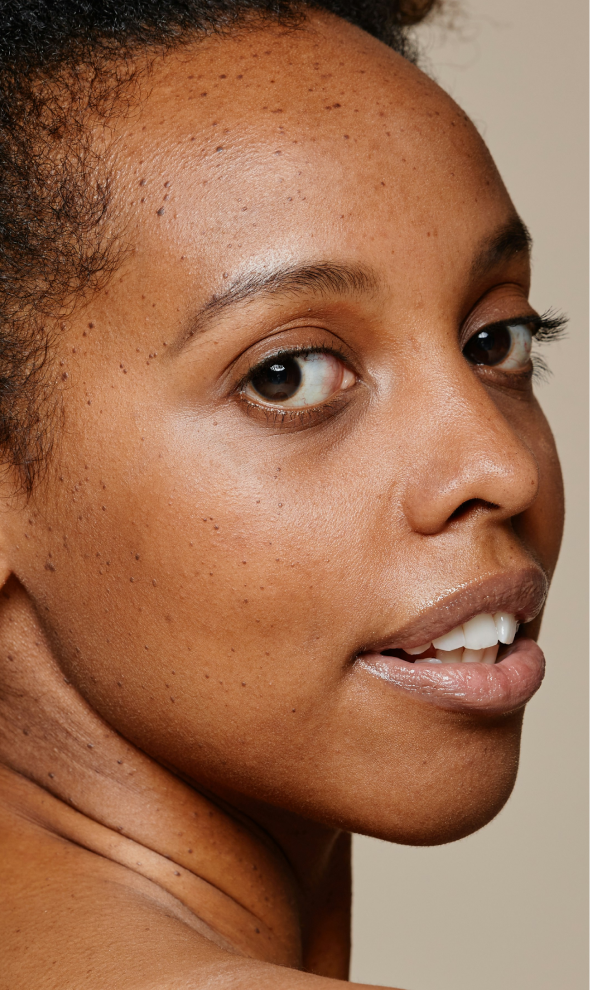
- The field treatment for sun damage
 Fraxel Dual LaserA fractional laser that treats sun damage across a whole area
 AlexandriteA Q switched laser for individual, defined dark spots
 IPLIntense pulsed light for brown spots and redness together
 Clear + BrilliantThe gentler laser in the Fraxel family, with little downtime
Side by Side
Fraxel, IPL and the Alexandrite laser each fade brown pigment in their own way. Clear + Brilliant is the gentler option, and Vbeam treats the redness. Many plans use more than one.
| Treatment | How it works | Suited to | Downtime | Sessions | Results |
|---|---|---|---|---|---|
| Fraxel Dual LaserNon-ablative fractional laser, 1550 nm and 1927 nm | A fractional laser treats microscopic columns of skin and leaves the skin around them intact; the 1927 nm setting targets discoloration | Sun damage, brown spots and freckling across the face, neck, chest and hands, with rough texture | Shorter than ablative lasers; a few days of redness and peeling | 1 to 5, set after your skin’s first response | After the first session, improving over time |
| AlexandriteQ-switched laser (Alex TriVantage) | Very short pulses of a single wavelength that brown pigment absorbs, aimed at each spot | A few individual sun spots and age spots with clear borders | Depends on the area and the number of spots | Depends on each spot; some need a second | As treated spots fade, over the following weeks |
| IPLIntense pulsed light | Intense pulsed light, not a laser: many wavelengths at once, absorbed by brown pigment and by small red vessels | Sun spots and freckling with background redness; a blotchy, uneven tone. Not for melasma | Little from the light itself; skip the sun after | A series; usually more than a laser needs | Gradually, over a series |
| Clear + BrilliantThe gentler laser in the Fraxel family | A gentle fractional laser in the Fraxel family, with 1440 nm and 1927 nm (Perméa) handpieces | Early sun damage, dullness and uneven tone, with little downtime | Little to none; redness usually settles in 12 to 24 hours | A series; improvement reported after 4 to 6 | Softer, brighter skin in 1 to 2 weeks |
| VbeamPulsed dye laser | A pulsed dye laser whose light is absorbed by the red pigment in blood | Redness and broken capillaries that come with sun damage, rather than brown spots | Depends on your settings; a red spot can turn purple for a few days | Usually 3 to 5 for redness across the face | Over a series; a single red spot in 1 or 2 sessions |
In Their Words

“
I highly recommend Dr. Fisher. I followed her from her previous practice and I continue to be happy with my results. I’ve gotten fillers and laser. Whenever I’ve wanted to do more, she was always honest with me. If I didn’t need it, I could count on her to tell me
Lillian J.
“
Dr. Idriss takes her time to listen to your concerns. She works with you to develop a treatment plan you are comfortable with, without ever being pushy. Her work is subtle and her expertise is evident. …
Sydney S.
“
I’ve always had a great experience here. Dr. Fisher is great, I’ve seen her many times for a variety of different conditions. I never feel rushed and her advice on treatments, products, and care have always been highly effective. The results are great. …
August R.
“
I would recommend Dr Idriss a thousand times over and over. She is extremely knowledgeable, knows what will work and what won’t and will always give you an honest recommendations. You will never feel pushed into moving forward with any injections or procedures.
Hiva F.
Bryant Park, New York
Your Dermatologists
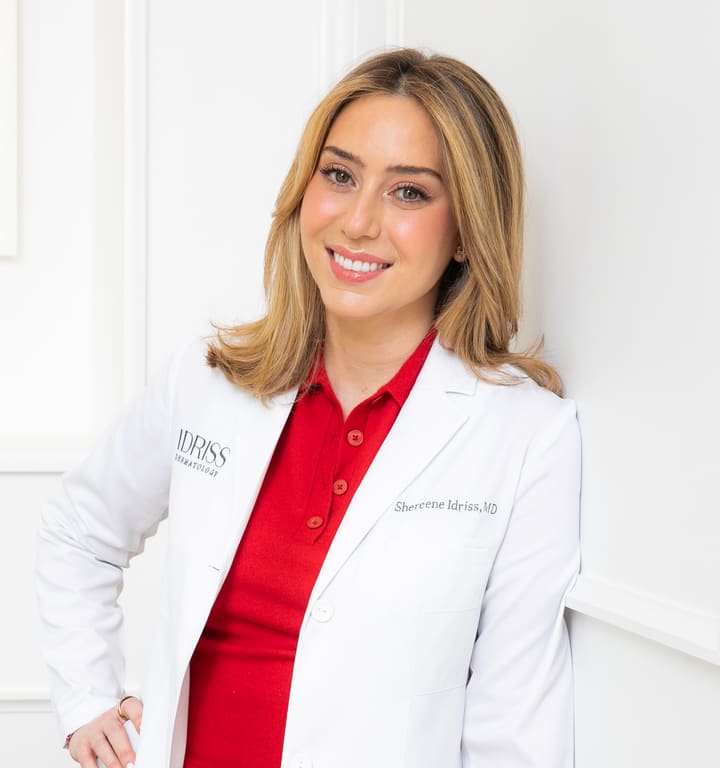
Founder
Dr. Shereene Idriss
Candid advice, subtle results.
Board-certified, Practicing since 2013
Dermatologic Surgeon
Dr. Juliya Fisher
A Mohs surgeon’s eye for every spot.
Double Board-certified, Columbia Mohs fellowship
Both doctors share one philosophy, so either is a good place to start. Book online with Dr. Fisher, or call (212) 612-1520 for Dr. Idriss.