Hair Loss &
Thinning Hair
Thinning hair and shedding, in women and men.
With Dr. Juliya Fisher and Dr. Shereene Idriss.

In Brief
Hair loss is thinning or shedding, most often from female or male pattern hair loss, shedding after stress, illness or pregnancy, or a medical cause such as a thyroid problem or low iron. We find the cause first, often with blood tests, then build a long term plan around minoxidil and topical finasteride every day, adding PRP for hair loss for many patients.
Diagnosis First
Not all hair loss is the same, and Dr. Idriss has had more than one kind herself. The causes fall broadly into three groups.
- Pattern. Female and male pattern hair loss runs in families. Hormones called androgens, such as DHT, shrink the hair follicles over time; in women it usually shows as a widening part and thinner hair on top. It is lifelong, with no cure, so treatment is long term.
- Shedding. Hair can fall out in larger amounts for a while after stress, illness or pregnancy. Dr. Idriss has been through it herself, after IVF, two pregnancies and COVID.
- A medical cause. A thyroid problem, low iron, low vitamin D or zinc, an autoimmune condition, or a scalp condition such as dandruff or psoriasis can cause hair loss or make it worse.
That is why a hair loss visit starts with your history, a close look at your scalp and, often, blood tests such as a thyroid panel and iron levels. If a medical cause is found, treating it comes first.
Pattern thinning, shedding after stress and hair loss with a medical cause can look alike on the scalp. A dermatologist sorts out which you have, sometimes with a blood test, before anything is prescribed.
“Hair loss is rarely one thing. I start with your history, your scalp and often your blood work, because hair grows slowly and months spent on the wrong cause are hard to make up.”
What We’d Skip
Hair loss is distressing, and a lot is sold to people at exactly that moment.
Don’t take biotin unless you are deficient
A true biotin deficiency is rare and comes with other signs. Extra biotin does not help hair without one, and it can throw off thyroid blood tests, which can lead to medication you do not need.
Don’t count on rosemary oil
Of rosemary oil, Dr. Idriss says it “is not going to help you.” See a dermatologist instead, so the cause is found and treated.
Don’t quit minoxidil in the first weeks
An early shed is expected while hair moves into its growth phase, usually between weeks two and six. Give it at least three months, and tell your doctor if shedding lasts beyond four. Stop it, and you go back to where you were.
Don’t microneedle your scalp hard at home
Rolling hard at home can break the hair you are trying to keep. In the office, PRP is injected into the scalp rather than microneedled, for the same reason.
Don’t start a hair loss pill without a doctor
Oral minoxidil is not for anyone with heart disease or blood pressure problems, and finasteride, as a pill or on the scalp, is avoided by women who are or could become pregnant. Your doctor checks first.
How Is Hair Loss Treated?
Treatment follows the cause, so it starts with a diagnosis. Pattern hair loss has no cure, and Dr. Idriss’s advice is to “throw the kitchen sink” at it, starting several treatments at once and paring back to what works.
- Any new hair loss or shedding. Find the cause first. Your doctor looks at the pattern and often orders blood tests, such as a thyroid panel and iron levels. If a medical cause is found, treating it comes first.
- Female or male pattern thinning. Daily medical treatment is the foundation. That means minoxidil, on the scalp or as a prescription pill, and prescription topical finasteride. They keep working between visits, for as long as you use them.
- Thinning that continues, or to add a boost. PRP for Hair Loss, made from your own blood, is added to the plan as three treatments a month apart, judged five to six months after the first. Not everyone responds.
A hair transplant does not replace these treatments. It can be worth adding where hair has thinned past what treatment can bring back, and even after a transplant we usually recommend a combination of the treatments above to maintain the result. A transplant is not a cure: as long as hair loss continues, the hair around the transplant keeps thinning. Your doctor will tell you if a transplant surgeon’s opinion should also be considered.
The Treatments
Daily medical treatment comes first, and many patients add PRP for hair.
 PRP for Hair LossYour own platelet rich plasma, injected where hair is thinning
 Minoxidil & FinasterideDaily topicals and prescriptions, the foundation of most hair plans
Side by Side
Minoxidil and finasteride are daily treatments, while PRP for hair is given in the office a few times a year. Most hair plans combine them.
| Treatment | How it works | Suited to | How often | Results |
|---|---|---|---|---|
| PRP for Hair LossInjected into the scalp; part of a wider hair plan | Platelet rich plasma from a small sample of your blood, injected into the scalp where hair is thinning; believed to keep hair in its growth phase longer and thicken existing strands | Thinning and shedding once the cause is known, added to daily treatment | Dr. Idriss’s approach: three, a month apart, then a pause | Judged 5 to 6 months after the first |
| MinoxidilOver the counter on the scalp; a prescription pill | Widens blood vessels in the scalp and keeps hair in its growth phase longer; the pill needs a doctor’s check of your heart and blood pressure | Female and male pattern hair loss, as the daily foundation | Every day, or most days, long term | Three to six months of consistent use, after an early shed |
| Topical finasterideA prescription, applied to the scalp | Blocks DHT, the hormone that shrinks hair follicles; applied to the scalp, often mixed with minoxidil | Pattern hair loss in men, and in women past menopause or using reliable contraception | Every day, long term | Judged with the rest of your plan at your follow up |
Hair Topicals & Supplements:
What Actually Helps?
Medical treatment is the daily part of a hair plan, and PRP adds to it, never replaces it. None of these is a cure, and each one works only for as long as you use it.
Topical minoxidil
The ingredient in Rogaine, sold over the counter as a foam or liquid. It is believed to widen blood vessels in the scalp and keep hair in its growth phase longer, so the hair you have stays longer and looks fuller. Expect an early shed, then three to six months of consistent use before you judge it. Keep it off your face, and away from cats and dogs, because it is toxic to them.
Oral minoxidil
A prescription pill, used off label at a low dose. Dr. Idriss switched to it when the topical irritated her scalp, and calls it “the thing that made the biggest difference” for her hair. It is not for everyone. Your doctor checks your heart and blood pressure first, and it can grow hair elsewhere on the body.
Topical finasteride
A prescription that blocks DHT, the hormone that shrinks hair follicles in pattern hair loss, compounded for the scalp and often mixed with minoxidil. Dr. Idriss prefers it to the pill, whose side effects include lower libido; less reaches the body, but the topical is not free of side effects. Women can use it if they are past menopause or using reliable contraception.
Spironolactone, for some women
A prescription that lowers the effect of androgens, used off label for some women with hormonal hair loss, especially with PCOS. It is not taken by anyone trying to become pregnant.
A medicated shampoo
Ketoconazole shampoo, an antifungal for dandruff, also blocks DHT a little. It is weaker than finasteride, but Dr. Idriss uses it herself, and it may help slow hair loss.
Supplements, for what you lack
Low iron and low vitamin D are common, treatable findings in women losing hair, which is why blood tests come first. Skip biotin unless you are deficient. Dr. Idriss takes a biotin free hair supplement and has used prenatal vitamins.
In Their Words

“
Dr. Fisher is amazing! She answered all of my questions and never pushed me onto anything. She cares about her patients. Will definitely come to her again if I need an opinion on anything relating to hair or skin.
Zubaida M.
“
Unparalleled experience. I’ve never been to a doctor’s office that not only looks like a home, but also makes me feel like family. From the minute I entered, I knew I was in good hands, and Dr. Idriss truly lived up to every expectation and beyond. She helped me achieve my skin and hair goals- and I have never felt more confident. I cannot recommend enough!
JC
“
I would recommend Dr Idriss a thousand times over and over. She is extremely knowledgeable, knows what will work and what won’t and will always give you an honest recommendations. You will never feel pushed into moving forward with any injections or procedures.
Hiva F.
Bryant Park, New York
Your Dermatologists
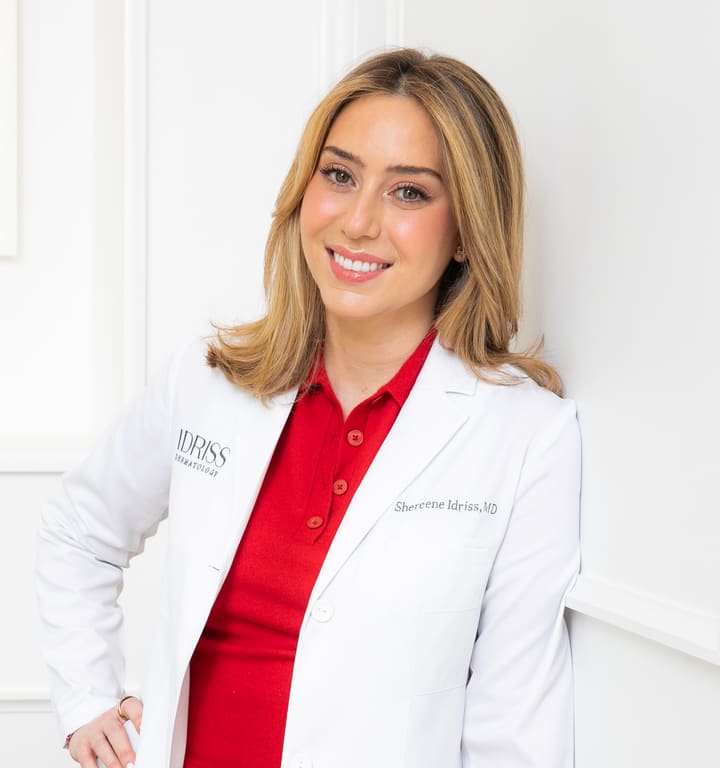
Founder
Dr. Shereene Idriss
Candid advice, subtle results.
Board-certified, Practicing since 2013
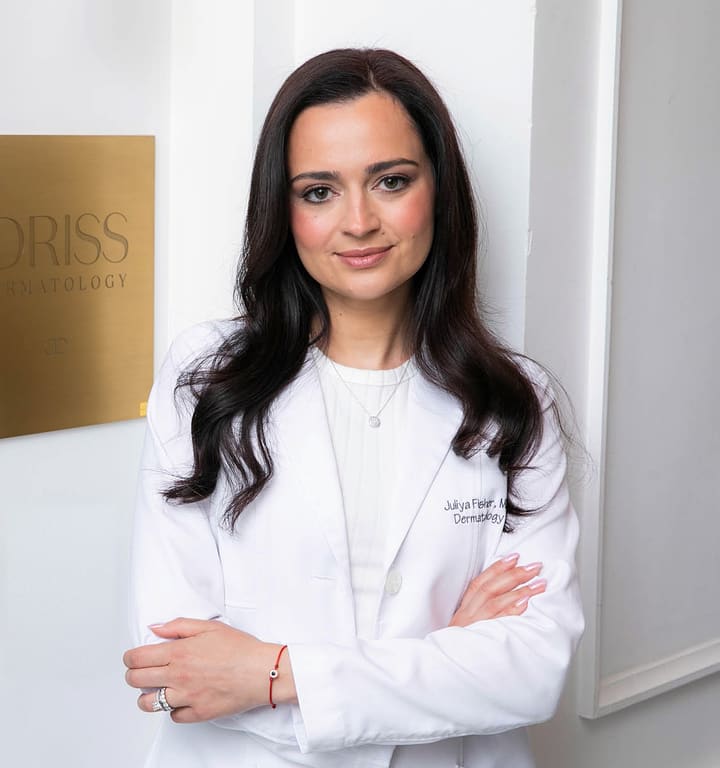
Dermatologic Surgeon
Dr. Juliya Fisher
Hair thinning, approached with real diagnostic depth.
Double Board-certified, Columbia Mohs fellowship
Both doctors share one philosophy, so either is a good place to start. Book online with Dr. Fisher, or call (212) 612-1520 for Dr. Idriss.