Botox
Each dose is set for the way your face moves,
so the lines soften and the expression stays.

What Is
Botox?
Botox is a neuromodulator, a purified protein that relaxes the muscles that crease the skin when you frown, squint or raise your brows. Each dose softens frown lines, forehead lines or crow’s feet while keeping the movement that makes you look like you. We also stock Dysport, Xeomin and Jeuveau, and your doctor chooses among them for your face and the area being treated.
At a Glance
- Comfort
- Quick pinches; numbing and nitrous oxide available
- Downtime
- None; a small bruise is possible
- Results in
- Builds over 10 to 14 days; peaks at 2 to 4 weeks
- Lasts
- About 3 to 4 months
- Sessions
- One; repeat once movement returns
- Time in office
- Injections take minutes
Who It’s For
For the lines your expressions leave behind.
Ideal For
Lines made by movement that are starting to stay at rest: frown lines between the brows (the 11s), forehead lines and, selectively, crow’s feet, which together with vertical neck bands are the four areas Botox Cosmetic is FDA approved to treat. Our doctors also use it, at their clinical judgment and in some cases off label, for corners of the mouth that pull down, a dimpled chin, a gummy smile, jaw clenching (only after checking your bone structure, because on a narrow jaw it can do more harm than good) and excessive underarm sweating. Compare Botox with our other injectables, or compare treatments for neck bands and neck lines.
When to Wait
Botox waits if there is an infection where it would be injected, and it is not for people with certain nerve or muscle conditions or an allergy to its ingredients. What matters is whether lines stay at rest, whatever your age. If your lines only show when you move, a retinoid and daily sunscreen are where prevention starts.
Botox or filler?
Botox relaxes the muscle that folds the skin, while filler restores volume that has been lost. Lines that come and go with expression respond to Botox, while hollows and folds that stay at rest respond to filler or to collagen building treatments. Many plans use both. Read about dermal fillers, or compare every treatment for lines and wrinkles.

“Botox is an art, and there is a learning curve with every single face, because every face is not created equal.”
The Treatment
1
Your Face
in Motion
Your doctor studies your face at rest and in motion, and agrees with you which lines to soften and which movement to keep.
2
A Few
Precise Doses
Small amounts are placed into the specific muscles that crease the skin. The injections take minutes, and you can go straight back to your day.
3
Softer Lines,
Still You
The effect builds over 10 to 14 days and peaks at two to four weeks. After about three to four months movement comes back gradually, and we let it return before treating again, so your face never loses its expression.
Beneath the Surface
Often paired with: Fillers, Lasers & Microneedling and PRF for Under Eyes.
“I trained as a Mohs surgeon, where every millimeter matters. I bring the same care to Botox: the right dose in the right muscle, so you look rested and still entirely like yourself.”
In Our Patients’ Words

“
I would recommend Dr Idriss a thousand times over and over. She is extremely knowledgeable, knows what will work and what won’t and will always give you an honest recommendations. You will never feel pushed into moving forward with any injections or procedures.
Hiva F.
“
She’s so knowledgeable but also fun and authentic and easy to talk to. She never tries to push expensive treatments on you, and her aesthetic is very natural, she wants you to look like yourself.
Stephanie W.
“
I’ve been seeing Dr. Idriss for a few years now, and I wouldn’t trust my face with anyone else. …
Neda D.
Bryant Park, New York
Your Dermatologists
Every dose means deciding which muscle, how deep and how much. Both doctors are board-certified dermatologists, trained to make those calls and to manage a result that is not what was planned.
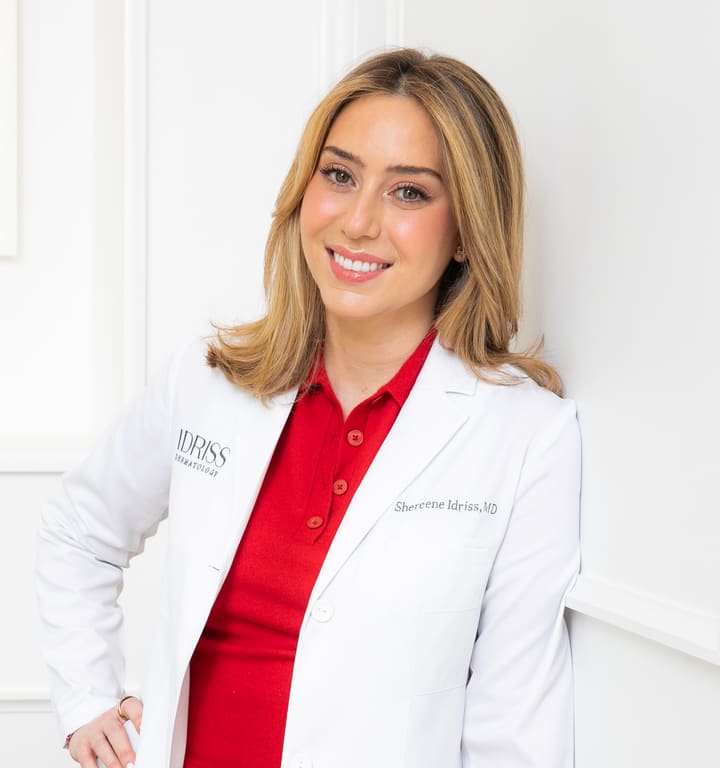
Founder
Dr. Shereene Idriss
Lets movement return before treating again, never a fixed clock.
Board-certified, Practicing since 2013
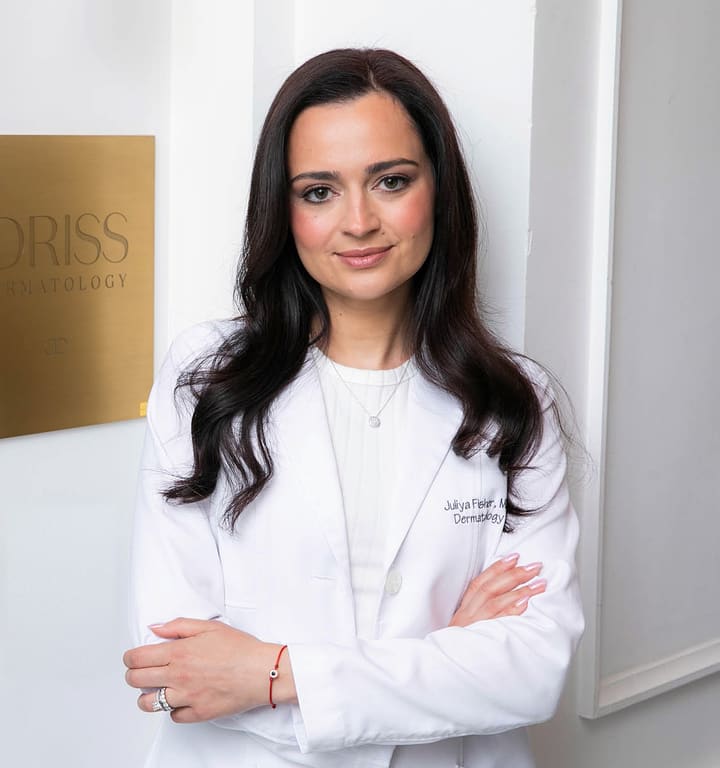
Dermatologic Surgeon
Dr. Juliya Fisher
Places each dose with the precision of a Mohs surgeon.
Double Board-certified, Columbia Mohs fellowship
Both doctors share one philosophy, so either is a good place to start. Book online with Dr. Fisher, or call (212) 612-1520 for Dr. Idriss.
Questions, Answered
How much does Botox cost at Idriss Dermatology?
Will Botox make me look frozen?
Botox, Dysport, Xeomin or Jeuveau: which is best?
How long does Botox last?
How often should I get Botox?
Does Botox hurt?
How long before an event should I get Botox?
We do not perform cosmetic treatments during pregnancy. Breastfeeding patients are evaluated case by case.