PRP for Hair Loss
Plasma from your own blood, injected where hair is thinning,
once we know what is causing it.

What Is PRP
for Hair Loss?
PRP for hair loss is platelet rich plasma, made from your own blood and injected where hair is thinning. We use it for shedding and for pattern hair loss (androgenetic alopecia), alongside minoxidil and topical finasteride. Its growth factors are believed to keep hair in its growth phase longer and thicken existing strands. Not everyone responds, and pattern hair loss has no cure.
At a Glance
- Comfort
- A blood draw, then scalp injections; it can hurt
- Downtime
- Low risk, in Dr. Idriss’s words
- Results in
- Judged 5 to 6 months after the first
- Sessions
- Dr. Idriss’s approach: three, a month apart, then a pause
- Lasts
- If you respond, repeat 1 to 3 times a year
Who It’s For
For thinning and shedding, once the cause is known.
Ideal For
Thinning hair and shedding, including female and male pattern hair loss, in someone willing to try three treatments and judge honestly. Dr. Idriss’s advice for genetic hair loss is to “throw the kitchen sink at it”, and PRP is one part of that. See every hair loss treatment we use.
When to Wait
Hair loss has many causes, so your doctor first looks for the reason, often with blood tests such as a thyroid panel and iron levels, before recommending PRP. If a medical cause is found, treating it comes first.
PRP, minoxidil or finasteride?
Usually together, not instead. We often combine PRP with daily minoxidil and prescription topical finasteride, compounded for the scalp, which keep working between visits. Compare PRP, minoxidil and finasteride.

“Hair loss has many causes, and PRP only makes sense once we know yours. I look at the pattern and often check blood work, such as thyroid and iron, first.”
The Treatment
1
Find the
Cause
Not all hair loss is the same. Your doctor looks at the pattern and often orders blood tests, such as a thyroid panel and iron levels, before recommending PRP.
2
Injected Where
It Thins
A small blood sample is spun in a centrifuge, and the platelet rich plasma is drawn off and injected across the areas where your hair is thinning. Where there is hair, Dr. Idriss injects rather than microneedles, to avoid breakage.
3
Three, Then
Judge
Three treatments a month apart, while you keep up the rest of your plan, then a pause. Five to six months after the first, you can judge whether it works for you. If it does, you decide how often to repeat it.
Beneath the Surface
Often paired with: Customized Care, PRP & PRF and PRF for Under Eyes.
“I have injected PRP into my scalp several times and it’s still my go-to for managing shedding …”
In Our Patients’ Words

“
Dr. Fisher is amazing! She answered all of my questions and never pushed me onto anything. She cares about her patients. Will definitely come to her again if I need an opinion on anything relating to hair or skin.
Zubaida M.
“
Unparalleled experience. I’ve never been to a doctor’s office that not only looks like a home, but also makes me feel like family. From the minute I entered, I knew I was in good hands, and Dr. Idriss truly lived up to every expectation and beyond. She helped me achieve my skin and hair goals- and I have never felt more confident. I cannot recommend enough!
JC
Bryant Park, New York
Your Dermatologists

Founder
Dr. Shereene Idriss
Has had PRP in her own scalp, twice a year.
Board-certified, Practicing since 2013
Dermatologic Surgeon
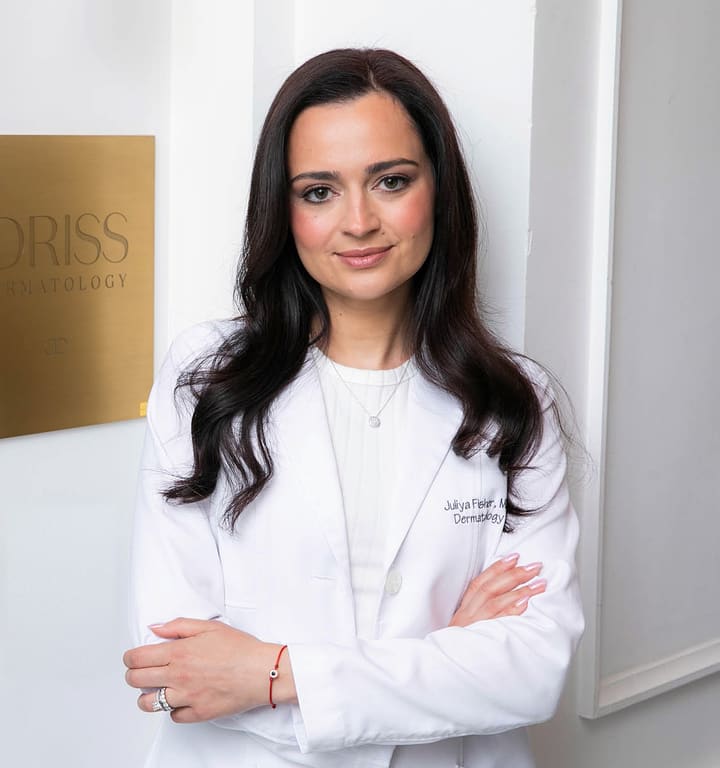
Dr. Juliya Fisher
Looks for the cause of your hair loss before recommending anything.
Double Board-certified, Columbia Mohs fellowship
Both doctors share one philosophy, so either is a good place to start. Book online with Dr. Fisher, or call (212) 612-1520 for Dr. Idriss.
Questions, Answered
How much does PRP for hair loss cost?
Does PRP for hair loss work?
How many PRP sessions do I need for hair?
Does PRP for hair hurt?
How long does PRP take to work for hair?
Can PRP cure hair loss?
Is PRP or PRF better for hair?
We do not perform cosmetic treatments during pregnancy. Breastfeeding patients are evaluated case by case.