Acne Scar Treatment
For ice pick, boxcar and rolling scars, and the marks acne leaves.
With Dr. Juliya Fisher and Dr. Shereene Idriss.

In Brief
Acne scar treatment is a plan of in office treatments that lift indented scars, smooth the surface and fade the marks acne leaves. We match it to your scar type, choosing among subcision with a light filler, SkinPen microneedling, paired with PRP or PRF or with radiofrequency, Fraxel Dual and, for the deepest scars, CO2 resurfacing. Most plans combine two or three over many months.
Diagnosis First
Acne scars form when inflamed skin heals without enough collagen, so the surface dips. These indented, or atrophic, scars come in three main types, and each is treated differently:
- Ice pick. Narrow, deep pits, treated with acid placed precisely inside each scar (TCA CROSS) so it heals from the bottom up.
- Boxcar. Wider dents with sharp edges, as if cut with a cookie cutter. They need to be lifted from beneath as well as resurfaced.
- Rolling. A soft, wavy surface, pulled down by fibrous bands beneath the skin. They show more as skin loosens with age.
Not every mark is a dent. Red, brown or lighter marks are color rather than texture, and “if your scar has color, treat the color first,” says Dr. Idriss. Raised scars, which pop out rather than dip in, need gentler care, such as a steroid injection to soften them.
An ice pick scar, a boxcar scar and a red mark each call for a different tool, and most faces have more than one. Mapping them is the first thing your dermatologist does.
“My surgical work is all about how skin heals. An acne scar is healing that went wrong in a particular way, and the type of scar tells me where to start.”
What We’d Skip
Acne scars attract a lot of quick fixes. Most waste money, and a few make scars worse.
Don’t treat scars while you are still breaking out
New breakouts make new scars, so the acne is brought under control first. The one exception is a laser for redness.
Don’t buy a package of laser sessions up front
“If anybody offers you a package of three laser treatments, run,” says Dr. Idriss. We treat, see how your skin responds, and then decide what comes next.
Don’t expect one laser to fix it
Lasers resurface the top of a scar, but boxcar and rolling scars need lifting from beneath first. No single treatment does it all, an aggressive CO2 laser included.
Don’t rely on an at home roller
Indented acne scars are treated at about 1.5 to 2 mm, deeper than is safe with any at home device. In office microneedling reaches that depth.
Don’t pick at your marks
Picking injures the small blood vessels that leave red marks behind, and can leave brown ones too. Daily sunscreen keeps marks from darkening.
How Are Acne Scars Treated?
Your scar type sets the plan. Most plans combine two or three treatments, usually in this order:
- Color first. Red marks and red scars respond to Vbeam, a laser for redness, while they are still red. Brown marks fade with daily sunscreen and a skincare routine; your doctor may add a prescription.
- Rolling and boxcar scars. Subcision: your doctor passes a needle beneath the scar to release the bands that tether it, and places a very light amount of filler (Dermal Fillers, an off label use) so the space stays open while it heals and lifts.
- Indented scars across the face. In office SkinPen Microneedling, authorized by the FDA to improve facial acne scars (De Novo DEN160029), rebuilds collagen beneath the scars over a series, often with PRP from your own blood, or with radiofrequency heat such as SecretRF or Morpheus8.
- Smoothing the surface, last. Once the base is lifted, Fraxel Dual Laser, a non-ablative fractional laser, smooths the top. For the deepest scars your doctor may use CO2 laser resurfacing, kept for the more extreme cases.
Ice pick scars are treated on their own, with acid placed inside each one. Every treatment takes three to six months to show, so your plan builds over a year or more. For rough texture and enlarged pores without scars, see skin texture and pores.
The Treatments
We use these alongside subcision, TCA CROSS and CO2 laser resurfacing, which your doctor explains at your visit.
 Morpheus8Microneedling with radiofrequency heat, for scars with loosening skin
- FDA authorized for acne scarsSkinPen MicroneedlingMicroneedling with no heat, often with PRP from your own blood
 Fraxel Dual LaserA non-ablative fractional laser that smooths the surface
 SecretRFGentler radiofrequency microneedling for scars in thin skin
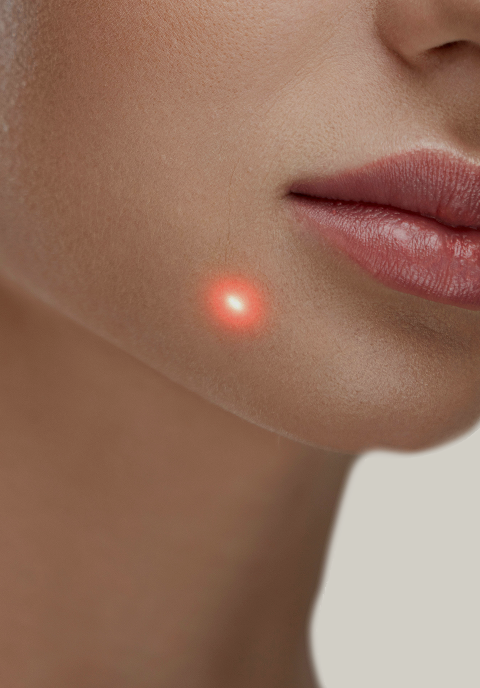 VbeamA laser for red marks and red scars
Side by Side
Microneedling rebuilds collagen beneath a scar, and a fractional laser resurfaces its top. Your doctor usually combines them with subcision, and keeps CO2 laser resurfacing for the deepest scars.
| Treatment | How it works | Suited to | Downtime | Sessions | Results |
|---|---|---|---|---|---|
| SkinPen MicroneedlingMicroneedling, often with PRP | Fine needles, with no heat, make controlled micro injuries so the skin rebuilds collagen and elastin | Indented acne scars across the face; skin that reacts to heat | 1 to 3 days of redness | More than one, 4 to 6 weeks apart | Texture from 4 to 8 weeks; builds for 6 months |
| PRP & PRF with MicroneedlingPRP and PRF from your own blood | Microneedling, with PRP from your own blood applied to the skin or PRF placed beneath it | Adding your own growth factors to a microneedling series | 1 to 3 days, like a mild sunburn | Dr. Idriss’s approach: three, a month apart, then a pause | Gradual and subtle; judged around 5 months in |
| SecretRFGentler RF microneedling | Needles up to 3.5 mm deep, with radiofrequency energy passing sideways between them | Indented acne scars in thin or crepey skin | A few days of pink, slightly bumpy skin | Often a short series | Over months; full effect at about 6 months |
| Morpheus8RF microneedling | Fine needles release radiofrequency heat beneath the surface, up to 4 mm deep on the face | Acne scars with loosening skin or uneven texture | 4 to 5 days of pink, slightly bumpy skin | One or a short series | Over months; full effect at about 6 months |
| Fraxel Dual LaserNon-ablative fractional laser, 1550 nm and 1927 nm | A non-ablative fractional laser treats microscopic columns of skin and leaves the surface intact | Smoothing the surface once deeper scars are lifted; shallow scars and texture | Shorter than ablative lasers; a few days of redness and peeling | 1 to 5, set after your skin’s first response | After the first session, improving over time |
“Collagen takes months to rebuild, so a scar plan runs over seasons. After each treatment I wait to see how your skin responds before I decide what comes next.”
In Their Words

“
I had a great experience with Dr. Fisher, who treated my acne scars with laser. She was incredibly compassionate, thorough and made me feel completely at ease throughout the whole process. It was so nice to have such an understanding and kind doctor for something is very personal to me. … I’m already noticing a boost in my self-esteem thanks to the care I received. I highly recommend Dr. Fisher and Idriss Derm in general!
Bernie F.
“
I would recommend Dr Idriss a thousand times over and over. She is extremely knowledgeable, knows what will work and what won’t and will always give you an honest recommendations. You will never feel pushed into moving forward with any injections or procedures.
Hiva F.
“
I highly recommend Dr. Fisher. I followed her from her previous practice and I continue to be happy with my results. I’ve gotten fillers and laser. Whenever I’ve wanted to do more, she was always honest with me. If I didn’t need it, I could count on her to tell me
Lillian J.
“
Absolutely love Dr. Idriss. She has a very thoughtful approach to her practice and really wants you to look and feel like the best version of you. I’ve been seeing her for years and trust her completely with all my skincare needs. She is also just a lovely person and my appointments are always a pleasure.
Ekaterina B.
Bryant Park, New York
Your Dermatologists
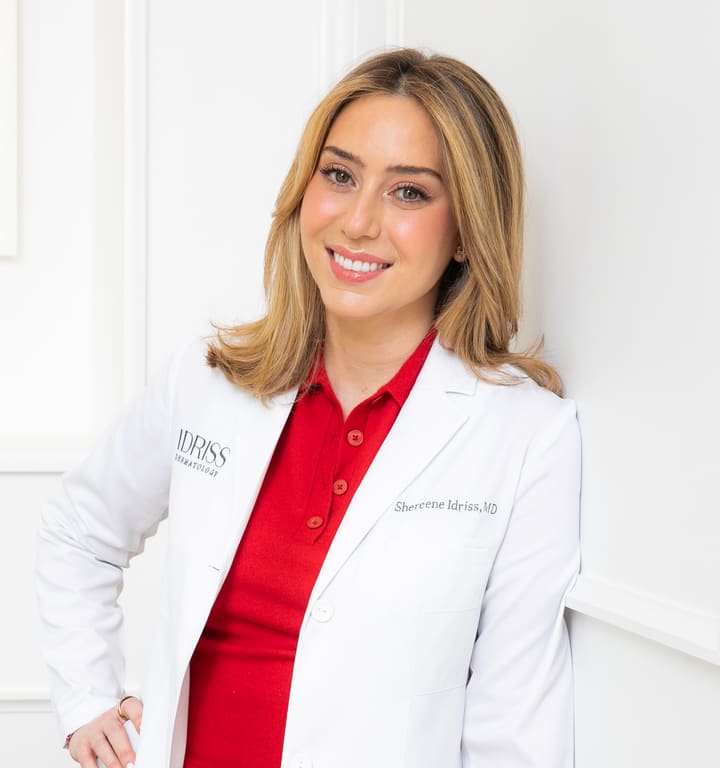
Founder
Dr. Shereene Idriss
Candid advice, subtle results.
Board-certified, Practicing since 2013
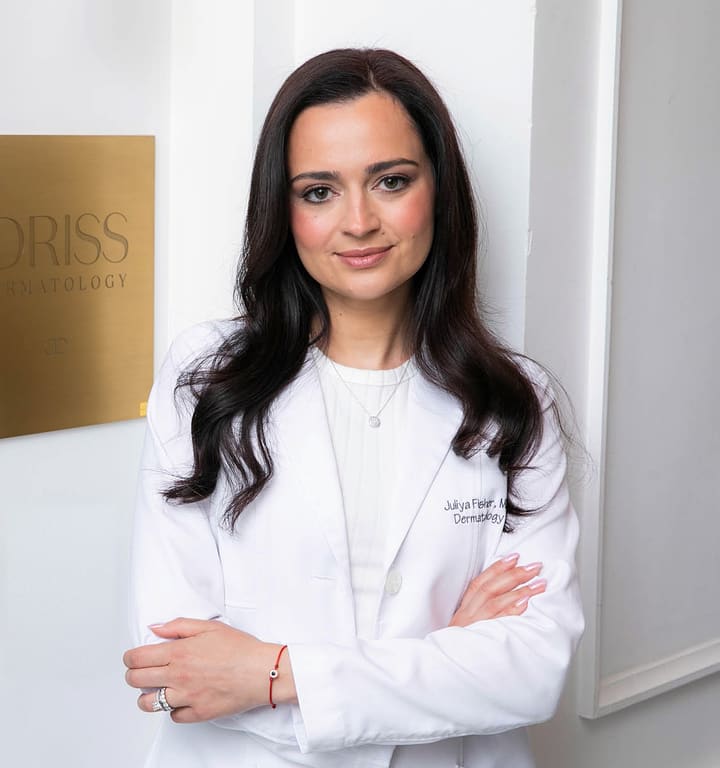
Dermatologic Surgeon
Dr. Juliya Fisher
A Mohs surgeon’s eye for how skin heals and scars.
Double Board-certified, Columbia Mohs fellowship
Both doctors share one philosophy, so either is a good place to start. Book online with Dr. Fisher, or call (212) 612-1520 for Dr. Idriss.